No products in the cart.
 03Oct
03Oct 



Magnesium is an element that is abundant in nature. It is the 9th most common element in the universe, the 8th in the earth’s crust, and the 3rd in the sea.
It takes its name from Magnesia in Thessaly. The Romans called it Magnesia alba because of the white color of the carbonate salts found in the prefecture of Magnesia. It was first isolated in 1808 by Sir Humphry Davy, and in the 19th century it was used as an antacid, laxative, and antidote to poisons.
It is the central atom in the chlorophyll molecule, a complex chemical compound that gives plants their green color and plays an important role in photosynthesis and, therefore, in plant survival.
In recent decades, there has been growing evidence of the beneficial effects of magnesium on many functions of the human body. In the human body, it is the fourth most abundant cation after sodium, potassium, and calcium, and the second most abundant in the intracellular space after potassium. The human body contains 22-26 g of magnesium, which is mainly found in bones and muscles, with only 1% found in the extracellular space.
The biological action of magnesium is due to its ability to form chelate compounds (very stable compounds formed between metal elements such as magnesium, iron, etc. and organic compounds such as hemoglobin, chlorophyll, adenosine triphosphate-ATP, etc.), but also to compete with the action of calcium. Magnesium participates as a cofactor in more than 300 chemical reactions, such as the binding of hormones (insulin, thyroxine, testosterone, etc.) with the receptor and the expression of their biological action, the transmission of neurotransmitter signals (dopamine, catecholamines, serotonin, GABA, etc.), the synthesis of nucleic acids and proteins, the metabolism of carbohydrates and fats, muscle contraction, neuron activity, vasomotor tone, and the binding of calcium to its channels.
In general, magnesium plays an essential role in regulating the body’s energy, in the functioning of the nervous and muscular systems, and in bone health, and is considered the natural competitor of calcium.
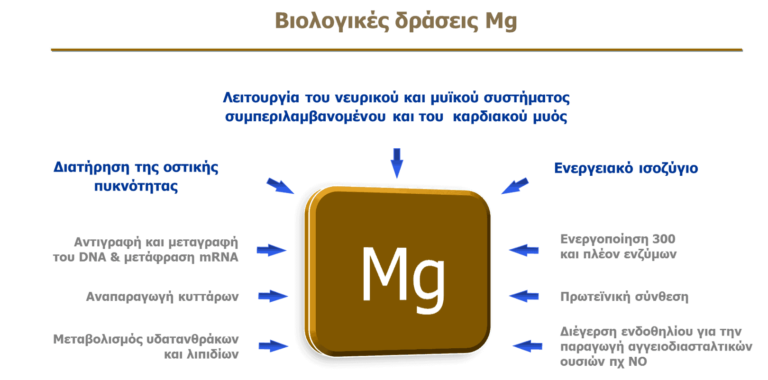
It ” It pulls the strings” for the proper functioning of the body. It keeps the heart rate at normal levels, regulates blood sugar, controls blood pressure, strengthens bones, and synchronizes the hormones that regulate mood. It also regulates the levels of calcium, copper, zinc, potassium, vitamin D, and other important nutrients in our body.
Magnesium is one of the essential minerals for the human body. Almost 50% of magnesium is found in bones and 45% is found inside cells, with only 5% outside cells. Magnesium is mainly absorbed in the small intestine and is quite important for supporting many daily bodily functions. It helps at both the cellular and tissue levels and is the fourth most abundant mineral in the human body.
Magnesium is a metal that is nutritionally vital for the normal functioning and health of the body, as it participates in over 300 biochemical processes in the body!
Magnesium is not produced by the body, but is obtained from food.
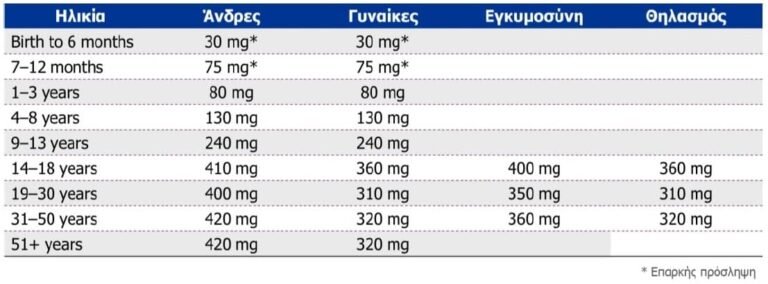
Daily magnesium requirements are related to gender, age, and various physiological conditions such as pregnancy and breastfeeding. Women have increased requirements during this period of their lives.
The recommended dietary intake of magnesium, according to the National Institute of Health and the Food & Nutrition Board, is:
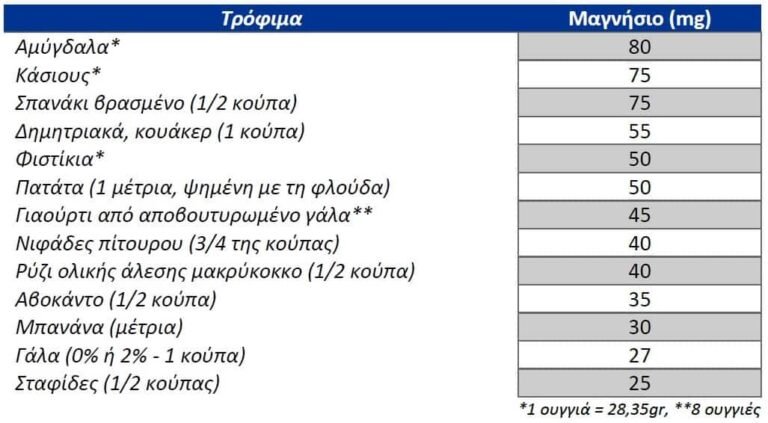
Magnesium is found in abundance in all foods except fats. Large amounts of magnesium are found in all green leafy vegetables, as magnesium is a component of chlorophyll, as well as in whole grains, cereals, nuts, and water. Smaller amounts are found in chocolate, fruit, meat, fish, and dairy products. Whole grain products contain more magnesium than processed foods, because food processing significantly affects their magnesium content, which can be reduced by up to 85%. Cooking, and especially boiling, significantly reduces the magnesium content of foods.
Which foods contain magnesium?
Magnesium is found in almost all foods. The richest sources are nuts, seeds, bananas, oats, broccoli, and peas. It is mainly absorbed in the small intestine.
Magnesium in food is absorbed in the intestine, mainly in the jejunum and ileum, and its absorption rate varies between 11-65%. Vitamin D and parathyroid hormone have a positive effect on absorption, while calcium, phosphorus, and a high-fat diet reduce its absorption. The kidney is the main regulator of magnesium in the body, having the ability to excrete up to 100% of the ion in cases of excess.
Factors that can affect magnesium levels in the body include:
Over the last century, there has been a gradual decline in daily magnesium intake, resulting in intake levels falling below requirements and deficiencies becoming more common than expected.
According to research, magnesium deficiency is observed in 2.5-15% of the population. It is common in hospitalized patients (7-11%) and often coexists with other deficiencies. Hypomagnesemia has been observed in 40% of cases of hypokalemia, 30% of cases of hypophosphatemia, and 23% of cases of hyponatremia and hypocalcemia.
If there is one dietary supplement that we recommend almost ALWAYS to EVERYONE, especially people who exercise, it is magnesium (Mg). It is one of the most valuable minerals in the body and participates as an enzymatic cofactor in over 300 biochemical reactions in our body!
These include protein synthesis, bone formation, DNA and RNA synthesis/repair, muscle contractions, regulation of the nervous system, blood pressure, and blood sugar, energy production from food, oxidative phosphorylation, and glycolysis.
How do we perceive its absence?
When magnesium levels are optimal in our bodies, we thrive. When we are deficient in magnesium, our bodies lose their balance and a host of health problems can arise.
Magnesium deficiency is one of the most common nutrient deficiencies we face, and this is a serious problem because our bodies need magnesium to carry out 300 incredibly important biochemical reactions. Magnesium is the fourth most abundant mineral in our bodies, so if we are deficient, which is the case for 50 to 90% of people, we will definitely experience some symptoms, which may include:
These are some of the signs that indicate the need to take magnesium supplements, with possible modifications and changes to your daily diet and habits in general. The conscious application of Orthomolecular Nutrition has significant benefits in terms of not only providing the body with the necessary amounts of magnesium, but also achieving a general balance in the nutrient balance!
Why is there a magnesium deficiency in the body?
The use of pesticides, hormones, insecticides, and chemical fertilizers, as well as the industrialization of agriculture, drastically reduce the soil’s nutrient content, especially its mineral salt content, which, combined with the heat treatment of seeds and fruits, both the quality and quantity of magnesium and other trace elements and minerals are dramatically reduced, with serious consequences for the end consumer of agricultural products, which unfortunately is us.
We must also not forget that medications damage the intestine, which is responsible for absorbing magnesium from the food we eat, because they slowly but steadily destroy its intestinal villi.
Almost 1 in 2 people (up to 75% in some studies) in Europe and America have an inadequate daily intake of Mg.
In addition, many diseases (diabetes), medications, stress, and certain foods deplete Mg reserves. Alcohol, caffeine, sugar, and large doses of vitamin D, calcium, and phosphorus (whose absorption is aided by Mg) will reduce our reserves. For adult men, the recommended daily dose is 420mg, while for women it is 320mg.
As a supplement, the “safe” dose is 350mg/day. Of course, these amounts are usually quite low, especially for athletes and depending on each person’s body weight.⠀
Before taking any Mg supplement, you should know that each of the forms available on the market has its own properties and bioavailability.⠀
🔹Magnesium citrate (Mg citrate). It helps with constipation as it acts as an osmotic laxative, drawing water into the intestine and softening the stool. As its name suggests, it is linked to citric acid, which is found in citrus fruits. It is one of the most bioavailable forms of magnesium and is easily absorbed by the intestine. If your magnesium levels are low, this is the one to choose, although very high doses have a laxative effect and can be used if you suffer from constipation. It aids kidney function. It is also used to treat depression and anxiety.
🔹Magnesium taurate. It helps in cases of severe anxiety, panic attacks, as well as cardiac arrhythmias and cardiovascular issues. It is derived from magnesium and the amino acid taurine. This form helps regulate blood sugar (glucose) and could be an important aid in prediabetic conditions.
🔹Magnesium malate. Combats fatigue. Contains malic acid, which helps cells produce energy (Krebs cycle). It is well absorbed and has no laxative effect. It is derived from magnesium and malic acid. It is often used to treat specific conditions such as fibromyalgia and chronic fatigue syndrome because it helps relieve muscle pain. It boosts energy levels.
🔹Magnesium glycinate (Mg glycinate). Perhaps the most bioavailable form of Mg, with high absorption due to glycine. Muscles love glycine, which has soothing properties and helps improve sleep quality. It is made from magnesium and the amino acid glycine. It promotes relaxation and helps with nerve pain. This is the option to go for if you want to improve your sleep and it could also help improve a range of inflammatory conditions, including heart disease and diabetes. It can also improve leaky gut. Try it to reduce stress, anxiety, and depression as well.
🔹L-threonate magnesium (Mg L-threonate). It is quickly absorbed by the brain through the spine. It enhances brain health, memory, and cognitive functions. It is also ideal for severe insomnia. It contributes to the restoration of neurons. It reduces symptoms of hyperactivity. It is being tested for depression and age-related memory loss, although trials are ongoing. It is very important to take it just before going to bed—not earlier!
🔹Magnesium chloride (Mg chloride). It is particularly beneficial for kidney function. It has high transdermal absorption, which is why it is also available in creams and topical products – useful for people who have difficulty absorbing minerals through digestion.
🔹Magnesium orotate (Mg orotate). Orotic acid (B13) supports the proper functioning of the cardiovascular system, the metabolism of B12 and folic acid, and improves our performance and endurance (ATP production).
🔹Magnesium oxide (Mg oxide). A very common form in supplements that is best avoided. The reason this one sends us straight to the toilet is that it is only 4% absorbable, so it simply passes through our system very quickly. We would also avoid sulfates and aspartates.⠀
🔹Magnesium chelate (Mg chelate). The term is used to describe a compound of metal with amino acids or other organic acids. Magnesium complexes with glycinate, aspartate, and taurine Magnesium compounds such as lactate, glycinate, aspartate, malate, and arginate belong to the chelated magnesium category and are considered to have high bioavailability. Chelated metals tend to be easier on the stomach and intestines and are generally better absorbed.
🔹Magnesium lactate (Mg lactate). This is naturally produced in the body when bound to lactic acid. If you need to take large amounts, this is the best form to choose, as it is easily absorbed by your digestive system. In addition to being a general supplement, it can also help with anxiety and depression.
🔹Magnesium sulfate (Mg sulfate) Better known as Epsom salts, magnesium sulfate is white, has the same texture as table salt, and tastes unpleasant. It can be used to treat constipation if you can tolerate it, but there are more palatable alternatives. Instead, it is more commonly added to bath water for relaxation, to relieve aching joints and muscles. It is also found in skin care products.
Those who exercise intensely need Mg post-workout to regulate acidity and calm the CNS. It is essential for our health and our gains.⠀
📚Institute of Medicine (IOM). Food and Nutrition Board. Dietary Reference Intakes: Calcium, Phosphorus, Magnesium, Vitamin D and Fluorideexternal link disclaimer. Washington, DC: National Academy Press, 1997.
The majority of ZMA* supplements contain magnesium aspartate!
Mg aspartate and Mg glutamate are essentially magnesium bound to the excitatory amino acids aspartic acid and glutamic acid, respectively. These are two of the most common excitatory neurotransmitters. A large dose of these can cause excitotoxicity, which manifests itself in damage to neurons and even cell death. It is truly absurd to “bind” magnesium to these amino acids in the first place, considering that we take magnesium primarily for its inhibitory/sedative effect on our nervous system. It defeats the purpose!
*ZMA or zinc magnesium aspartate is a supplement consisting of two minerals (zinc and magnesium) and vitamin B6.
Empirically, the best all-around form if we have to limit ourselves to one (due to cost and complexity) is Mg Glycinate for post-workout and in the morning. It has shown quite good results and is the most tolerable even in very large quantities by almost everyone, perhaps due to its high bioavailability.
Dosage for MG Glycinate is 300-500mg, 1-2 times/day (we increase the dosage gradually to assess our tolerance).
Alternatively, Mg Malate is also of very good quality.
The threonate form is clearly the best choice for before bedtime by far.
The threonate form is clearly the best choice for before bedtime by far.
Below are two recommended magnesium products.
https://nutriboost.gr/product/chelated-magnisium-glycinate-swanson/
https://nutriboost.gr/product/zma-magnesium-vitamin-b6-zinc/
 03Oct
03Oct  03Oct
03Oct  03Oct
03Oct  by
by 
 by
by