No products in the cart.
 02Oct
02Oct 


Amino acids are one of the best, and probably most underrated, nutritional/performance supplements.
When we think about supplements, the following probably come to mind first:
The first three have variable responses to exercise performance.
Proteins are polymer chains structured from amino acids linked together by peptide bonds. During human digestion, proteins are broken down into smaller polypeptide chains by hydrochloric acid and proteases in the stomach.
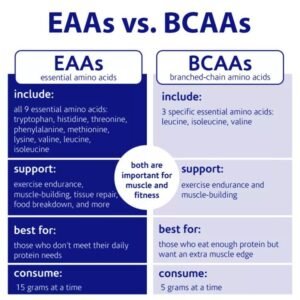
Amino acids are divided into essential amino acids (EAAs) and branched-chain amino acids (BCAAs). EAA and BCAA, while probably not at the top of your supplement list, share a reputation among bodybuilders as top supplements on the shelf. Both are known to promote muscle hypertrophy and recovery. BCAAs are probably the more popular supplement, but EAAs have gained attention for their superior benefits in exercise performance.
It is interesting that BCAAs are truly essential, which raises the question:
“Which is the better supplement, EAAs or BCAAs?”
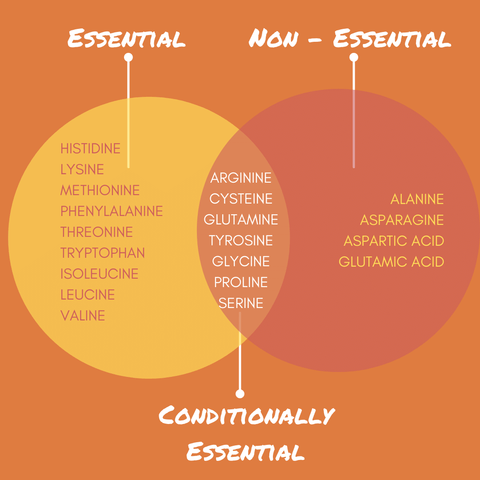
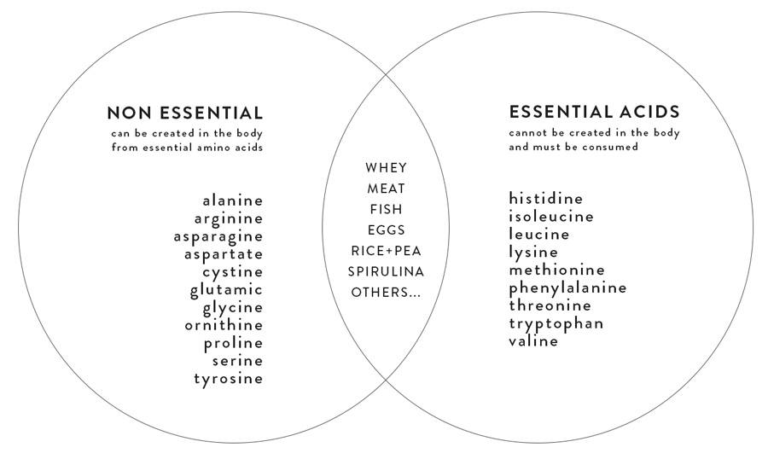
There are twenty distinct amino acids, and they can be divided into three distinct groups:
Essential amino acids are so named because the body cannot produce them on its own, so they must be supplied through diet.
Branched-chain amino acids are named for the distinctive branch-like structure they share, which sets them apart from other essential amino acids. Technically, BCAAs are essential, so they are usually concentrated. The distinction between EAAs and BCAAs is most often discussed in the fitness industry…
There are a total of 9 EAAs, of which 3 are BCAAs.
AMINO ACIDS: EAAs vs BCAAs. Below are the 9 EAAs (which include BCAAs):
The best sources of EAA (and BCAA) are fish, red meat, eggs, dairy products, and soy-based products. Both EAAs and BCAAs are highly regarded in the fitness industry due to their role in protein synthesis and performance enhancement.
In fact, EAAs regulate how effectively your body uses and converts protein.
The key point here is that protein synthesis is governed by the types and amounts of amino acids available. If you want to maximize athletic performance (muscle hypertrophy), you need to increase protein synthesis. Dietary proteins, or protein supplements, are perhaps the best way to supply your body with the protein it needs.
ΑΜΙΝΟΞΕΑ: EAA έναντι BCAA
EAA’S VS BCAA’S FOR EXERCISE, WHAT IS THE DIFFERENCE & ARE BOTH NECESSARY?
BCAA dosage and timing: When you take your BCAAs can determine how effective they are. Research on the correct dosage varies from 5 g to 10 g, but higher doses do not really contribute to additional gains. Stick to the 5 g serving size or follow the instructions on the supplement. As for timing, during and after training seems to be the best approach. You can load your muscles with the essential amino acids that will help increase glucose utilization and help your muscles recover.
Here are the main benefits of EAA supplements, compared to BCAAs alone.
AMINO ACIDS: EAA versus BCAA
Dosage and Timing: As with BCAAs and many other supplements, timing and dosage are important for EAAs. In terms of dosage, 10g–20g per serving is probably all you need. Some may approach 30g or more, depending on muscle mass/weight, goals, total calorie intake, etc. Experience – and research – suggest that during and immediately after training are the ideal times to consume them.
For those considering taking EAAs during and immediately after a workout (including protein supplementation), research indicates that the protein synthesis stimulated by EAAs lasts for 1-2 hours. so doubling the doses does not equate to double the effect.
Food sources: You can find EAA in high amounts in the same foods where you find BCAAs. The foods with the highest concentrations of EAA are:
Plant sources:
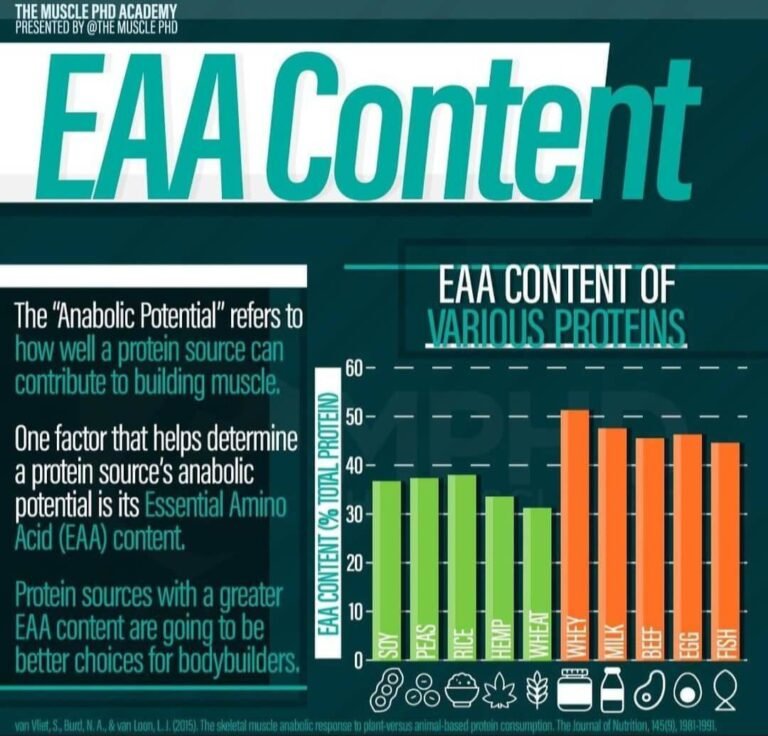
ESSENTIAL AMINO ACID (EAA) CONTENT IN VARIOUS PROTEIN SOURCES
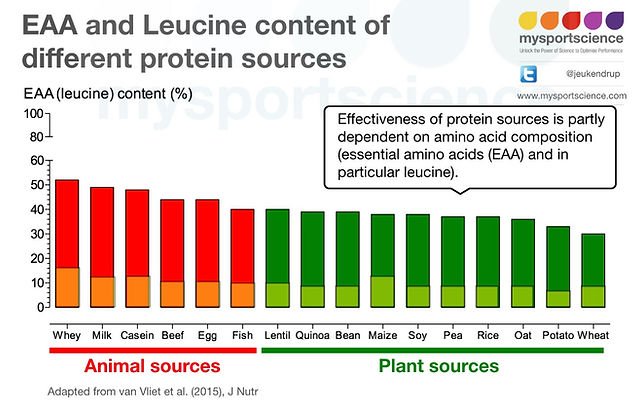
CONTENT OF ESSENTIAL AMINO ACIDS (EAAs) AND LEUCINE IN VARIOUS PROTEIN SOURCES
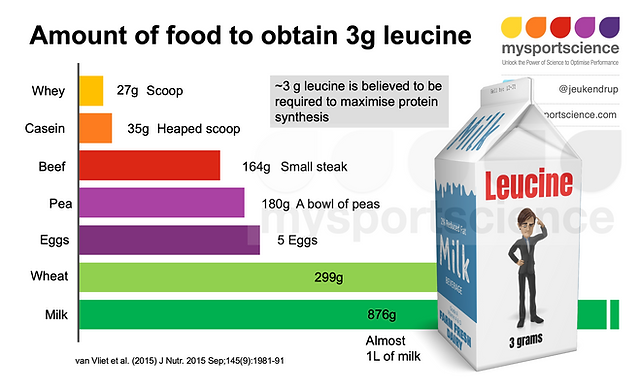
AMOUNT OF PROTEIN FOODS FOR THE INTAKE OF 3g OF LEUKIN
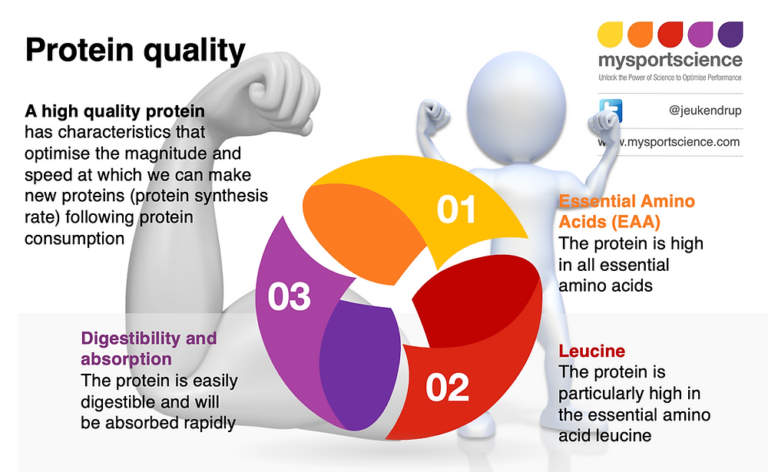
3 KEY CRITERIA WE CONSIDER WHEN SELECTING THE QUALITY OF THE PROTEIN SOURCE:
AMINO ACIDS: EAA versus BCAA
In conclusion, if we were to examine supplements from the perspective of greater and lesser necessity, it would be as follows:
Whey > EAAs > BCAAs.
At the following link in the amino acids category, you can find the one that suits your needs.
 03Oct
03Oct  by
by 
 by
by